

Have you ever tried to get out of bed, only to suddenly feel like you’re stuck on a Tilt-a-Whirl? This alarming sensation, known as vertigo, is a specific type of dizziness that creates a false sense that you or your surroundings are moving. Vertigo often involves the vestibular system, or other systems involved in balance are functioning.
What many people don’t realize is that physical therapy can help manage both vertigo and dizziness. At Responsive Physical Therapy and PT Works, we offer specialized PT services that can help you understand your symptoms and determine what may be contributing to them so your care can be tailored to your needs.
Dizziness and Vertigo: What’s the Difference?
People often use “dizziness” and “vertigo” interchangeably, but they actually describe different experiences:
Dizziness
Vertigo
Neither dizziness nor vertigo is a condition in and of itself. Rather, they’re symptoms that can have a number of potential causes, which is why careful evaluation is important for determining the most appropriate next steps.

The Role of the Vestibular System
One potential source of dizziness and vertigo that we look at closely is your vestibular system.
Your vestibular system includes structures in the inner ear and pathways in the brain that process information about head movement and position. It continually works with your vision and sensory information from your muscles and joints to help you maintain balance and keep your vision stable as you move.
Dizziness or vertigo can occur when there are changes in how your vestibular system processes information. For example, many people experience vertigo symptoms due to benign paroxysmal positional vertigo, which develops when tiny calcium carbonate crystals become displaced into one of the inner ear’s semicircular canals, where they can cause abnormal signals during certain head movements.
However, BPPV isn’t the only cause of vertigo or dizziness, which is why we always base your treatment plan on an individualized assessment.
How Physical Therapy Can Help With Dizziness and Vertigo
At Responsive Physical Therapy and PT Works, we offer vestibular rehabilitation, a specialized form of physical therapy that can be helpful for certain types of dizziness, vertigo, and balance problems. Vestibular rehab includes several targeted treatment techniques that can be selected and adjusted based on your symptoms, assessment findings, goals, and response to care.
Depending on what we learn from your assessment, treatment might include:
Canalith Repositioning Maneuvers
If your assessment indicates BPPV, treatment generally starts with a sequence of carefully controlled head and body movements. They help guide displaced inner-ear particles back toward an area where they are less likely to trigger vertigo.
Gaze Stabilization Exercises
One of the jobs of your vestibular system is to help keep your vision clear while your head moves. We may prescribe exercises that involve coordinated head and eye movements to improve your ability to focus on a target while moving.
Habituation Exercises
Some people experience dizziness or vertigo during certain movements or in particular environments. Carefully selected and repeated exposure to symptom-provoking movements or environments may help reduce sensitivity over time.
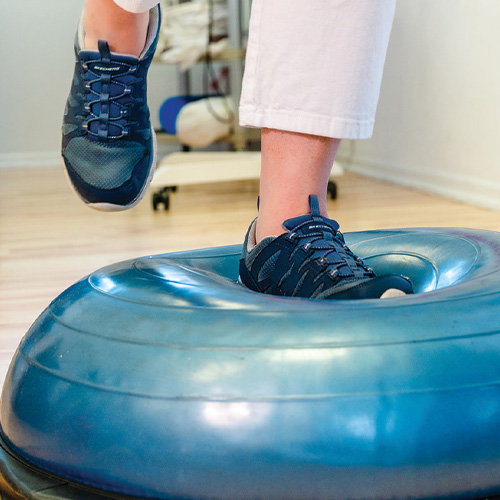
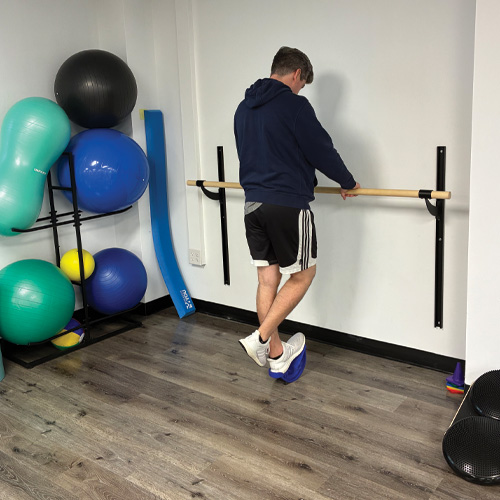
Balance Training
Our team can also use exercises to challenge balance and stability during standing and walking under different conditions. We might adjust foot position, surfaces, visual input, head movement, and other variables based on your abilities and goals.
Walking and Functional Training
Dizziness can affect key activities such as walking while turning your head, changing direction, or moving through visually busy spaces. Practicing relevant tasks in a controlled setting can help improve function and confidence as you work toward the activities that matter to you.
Self-Management Strategies
Your therapist can help you understand your symptoms and provide specific exercises and practical strategies to support your progress between visits. Your program can also be adjusted over time based on how you respond and what challenges remain.
Your Treatment Should Fit Your Symptoms
There isn’t a single exercise program that works for everyone with dizziness or vertigo. That’s why the Responsive Physical Therapy and PT Works team takes the time to understand what you’re experiencing, how your symptoms affect daily life, and what you want to get back to doing. This allows us to create a personalized care plan based on your specific symptoms, needs, and goals. As you progress, we can refine your plan based on what is working best for you.
If you need help managing dizziness or vertigo symptoms, schedule an appointment with us today to get started.
🌀 When the Room Starts Spinning
Dizziness & Vertigo: Myth or Fact?
Test your knowledge and learn how physical therapy can help with dizziness, vertigo, and balance problems.
5 Healthy Halloween Tips
Halloween is a creepy-fun holiday for kids, but it can also be full of hazards for your little ghosts, witches, and superheroes.
“Halloween is a super fun night, and it’s certainly one of my favorite nights of the year. We don’t want to take the fun out of it for kids, but there are some important health and safety risks to be aware of during and after trick-or-treating,” says Jennifer Hanson, MD, a Mass General Brigham for Children pediatrician who cares for patients at Massachusetts General Hospital.
You and your kids can have a safe Halloween by taking a few simple steps and staying vigilant. Dr. Hanson discusses safe trick-or-treating, costumes, and other safety tips for Halloween:
1. Carve safely (or not at all!).
It goes without saying that children should never handle sharp knives, and parents and caretakers should always assume pumpkin carving duties. But there are ways to avoid sharp blades completely.
“Have kids decorate pumpkins with paint and stickers instead of carving them,” suggests Dr. Hanson. They can create all kinds of detailed and unique designs. Just be sure the paint is nontoxic.

2. Make costumes safe.
Costumes are the centerpiece on Halloween night, but they can pose risks to your kids. Here’s what to avoid:
- Costume pieces that are baggy or drag and could cause tripping
- Dark costumes that make it difficult for drivers to see your kids
- Masks that limit peripheral vision (Dr. Hanson suggests nontoxic face paint instead of masks)
- Poor-fitting shoes or high heels that might cause falls
3. Be seen on the streets.
When you’re out trick-or-treating, safety often comes down to how visible you are to drivers.
Halloween is a busy night, so expect more traffic on the roads than usual. Reinforce for kids the importance of walking on sidewalks (not in the street) and crossing only at labeled crosswalks, where drivers can see you.
Make it easy for drivers to see you and your kids as the sun starts to set. “Add reflective tape to costumes and have kids carry glow sticks and flashlights,” suggests Dr. Hanson. Give your kids brightly colored trick-or-treat bags, and put reflective tape on those, too.
She also recommends using strollers and wagons for little ones, even if they can walk on their own. “That way, it’s easier to keep track of small children,” she says.
4. Be alert behind the wheel.
If you’re driving on Halloween, you have an extra responsibility. “Children are more than twice as likely to be hit by a car on Halloween night,” says Dr. Hanson. “Kids are excited, so you need to expect they’ll be running and moving around more erratically than usual.”
She offers these safe driving tips:
- Drive slowly.
- Stay off your phone.
- Take extra time at crosswalks, stop signs, and traffic lights.
- Turn on headlights even before it’s fully dark.
- Watch for kids running out between parked cars.
5. Don’t be distracted.
Excited kids will be less attentive—and more unpredictable—than usual, so it’s your job as the adult to be extra vigilant when out trick-or-treating.
“There should be no phone use while you’re walking,” says Dr. Hanson. “It’s just too easy to get distracted when you have your phone in your hand.” And if you’re walking with other adults, be careful not to get too caught up in conversation.

Dr. Christine Daly PT, DPT
Clinic Director • Physical Therapist • PT Works Point Pleasant
Please join us in getting to know Dr. Christine Daly, PT, DPT, Clinic Director and Physical Therapist at Physical Therapy Works Point Pleasant. Dr. Daly brings experience in outpatient orthopedics and neurological care, along with a passion for helping patients stay active and engaged in the activities they love.
LSVT-BIG Certified
Dr. Daly is LSVT-BIG certified to treat Parkinson’s disease patients, adding specialized neurological expertise to her broad clinical experience.
Dr. Daly received her Bachelor of Science in Health Science in 2018 and her Doctorate in Physical Therapy in 2021 from Stockton University. While at Stockton, she was an active member of the cross country and track and field teams.
During her postgraduate studies, Dr. Daly researched the benefits of mindful movement therapies such as tai chi and yoga for treating Fibromyalgia. Her clinical rotations included Robert Wood Johnson University Hospital and Body In Balance, the Parkinson’s Life Center of Southern New Jersey.
She began her professional career in outpatient orthopedics before joining the Physical Therapy Works and Responsive Physical Therapy team in 2023. She has treated a wide range of orthopedic and neurological diagnoses and is LSVT-BIG certified to treat Parkinson’s disease patients.
Outside of the clinic, Dr. Daly enjoys hiking and camping, skiing, traveling, and running.
Clinic Director & Physical Therapist
Dr. Daly serves as Clinic Director and Physical Therapist at Physical Therapy Works Point Pleasant.
Orthopedic & Neurological Care
Her experience includes outpatient orthopedics and a wide range of orthopedic and neurological diagnoses.
Active Lifestyle
Outside the clinic, she enjoys hiking and camping, skiing, traveling, and running.
We’re proud to have Dr. Daly on the team and celebrate her commitment to patient care, professional excellence, and an active lifestyle!
Ready to Move Better and Feel Your Best?
Whether you’re managing an orthopedic condition or recovering from a yard-work strain, our team at Responsive Physical Therapy and PT Works is here to help. Contact us today to schedule your appointment.